
- Health Conditions A-Z
- Health & Wellness
- Nutrition
- Fitness
- Health News
- Ayurveda
- Videos
- Medicine A-Z
- Parenting
David Protein Bars Faces Lawsuits For Understating Calories And Fat Content

Credits: davidprotein.com and Instagram
David Protein Bars is facing a lawsuit that alleged that the company misrepresented the calorie and fat contents. It is a challenge for a company which is known for catering health-conscious customers.
The complaint was filed on January 23 in the US District Court for the Southern District of New York. Three individuals who bought David bars claimed that the protein bars contained "way more" calories and fat than the label noted.
Also Read: What Is the Viral Water Stacking Trend?
As per CBS News, independent and third-party testing used a method called Atwater factors. The result showed that the number of calories exceeded the amount listed on the label as much as by 83 per cent.
Fat Content In David Protein Bars
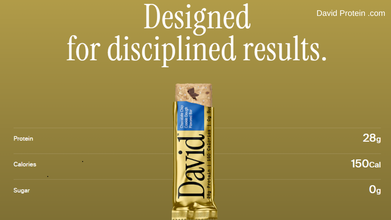
The lawsuit alleged that David Protein underestimated the fat content, as the testing revealed that the fat content exceeded by as much as 400 per cent.
As per the David Protein's website and the product label, the bar is supposed to contain 150 calories, 28 grams of protein and 0 grams of sugar. The lawsuit also stated Food and Drug Administration (FDA) guidelines that dictate that a product is misbranded if the "nutrient content of the composite is greater than 20% in excess of the value for that nutrient declared on the label."
The lawsuit names Linus Technologies as the primary defendant. The nutrition-focused company was founded by entrepreneur Peter Rahal in 2023, according to market intelligence platform Tracxn. It operates under the brand name David Protein.
Neither Linus Technologies nor David Protein immediately responded to requests for comment as reported by CBS News. However, on Wednesday the company posted a statement on Instagram that said, “No one is getting Regina Georged,” referencing the film Mean Girls, where the character Cady Heron tricks Regina George into eating a protein bar that leads to weight gain.
After the lawsuit was filed in January, Rahal told Vanity Fair that the company stands by the accuracy of its product labeling and plans to strongly contest the claim.
The David Protein bar was launched in 2024. According to Forbes, its name is inspired by Michelangelo’s famous 16th-century sculpture David.
The bars are sold in several flavors, including chocolate chip cookie and fudge brownie. A pack of 12 bars retails for $39, which works out to about $3.25 per bar.
Clear Information On Labels
FDA last year announced that in the coming next few years, food manufacturers have to put nutritional labels on the front of packaged foods. This proposal by FDA comes in the content of chronic diseases and the need for combating the same. The front-of-package labels are required for "most packaged foods", said the announcement.
Read: FDA Wants Nutrition Labels Of Saturated Fat, Sodium, And Added Sugar On Food Packaging
This announcement makes it easier for the customer to read the nutrition box that could otherwise go unnoticed, with many thinking that they are consuming something healthy. In most cases nutrition boxes are placed behind the packaging, and many ignore the content and thus continue to consume products with the presumption that it is healthy.
The Gut-Brain Axis: How Diet May Influence Parkinson’s Disease
Credit: Canva
Parkinson’s Disease is traditionally characterized by motor symptoms such as tremor and dyskinesia, although non-motor symptoms, in particular gastrointestinal (GI) symptoms such as constipation and incomplete emptying, are often the first markers of the disease and may precede the motor symptoms by years.
GI dysfunction is reported in approximately 70-80 per cent of Parkinson’s patients, mediated in large part through the gut-brain axis (GBA).
Speaking to HealthandMe, Dr Paresh Doshi, Director of Neurosurgery and Stereotactic and Functional Neurosurgery at Jaslok Hospital and Research Center, GBA, is an established two-way network that links the GI tract and the central nervous system (CNS). The connection is multifaceted, involving the vagus nerve, the enteric nervous system (ENS), the immune system, and a vast number of microbial metabolites and neuroendocrine signals.
“Constipation is seen in 66 per cent of Parkinson’s patients, attributed to disordered central and peripheral parasympathetic disruption, and can lead to alteration of the gut microbiome, which in turn worsens constipation, starting a feedback loop,” the doctor explained.
What Parkinson’s Patients Must Eat
Dr Sudhir Kumar, Neurologist at Apollo Hospitals Hyderabad, told HealthandMe that changes in the gut microbiome may influence inflammation, α-synuclein aggregation, and symptom progression.
Practical dietary principles for Parkinson’s patients include:
- Prefer fiber-rich, plant-based foods (vegetables, fruits, whole grains), which support gut microbiota
- Include fermented foods (curd, buttermilk), which may improve microbial diversity
- Reduce ultra-processed and pro-inflammatory foods
- Ensure adequate hydration (helps reduce the risk of constipation, a common non-motor symptom)
- Protein timing matters: Levodopa competes with amino acids for absorption.
These gut-targeted interventions are promising adjuncts to conventional Parkinson's therapy, and improving patient quality of life.
Parkinson’s Treatment With Dance, Art
Beyond gut-brain axis, research has proven that unconventional therapy, like dance and art, can improve Parkinson’s treatment.
A 2024 study published in the Scientific Reports found that tango, particularly Argentine tango, improved Parkinson's symptoms like thinking problems or balance issues. It also led to a significant improvement in recognizing emotions on people's faces.
Dr Kumar said dance therapy improves balance, gait, and coordination; provides rhythmic cueing, which enhances motor performance, and improves mood and motivation (dopamine-related pathways).
Similarly, art therapy has been shown to improve overall visual-cognitive skills and visual exploration strategies as well as general motor function in patients with Parkinson’s. The changes in brain connectivity highlight a functional reorganization of visual networks, as revealed by a study published in Parkinsonism & Related Disorders.
Dr Kumar said art and creative therapies are also helpful in enhancing cognitive engagement. It may help with executive function and emotional well-being and provide a non-verbal outlet for expression. However, these therapies work best as adjuncts, not replacements, to standard treatment, the expert noted.
World Parkinson’s Day 2026
World Parkinson's Day is observed annually on April 11 to raise global awareness of Parkinson’s disease, the world's fastest-growing neurodegenerative disorder.
It highlights the need for early diagnosis, research, and support for the nearly 10 million people living with the condition. The day marks the birthday of Dr. James Parkinson, who first described the disease in 1817.
The theme of World Parkinson's Day 2026 is "Bridge the Care Gap." It reflects a critical challenge that persists despite advances in medical research: many people living with Parkinson's still lack consistent access to specialist care, affordable treatment, and integrated support systems.
Parkinson's disease affected 11.9 million people in 2021 and will affect 25.2 million people globally by 2050, representing an alarming 112 per cent rise.
India’s 8th Poshan Pakhwada Targets Early Nutrition to Boost Brain Development In Children

Credit: Ministry of Women and Child/X
India's Ministry of Women and Child Development today launched the 8th edition of Poshan Pakhwada, under the flagship Poshan Abhiyaan mission to fight against malnutrition and improve the country's nutritional status.
The nutrition campaign will run from April 9 to 23, and focuses on improving the nutritional and cognitive health of young children under six years.
"A well-nourished child is the foundation of a strong nation. Poshan Abhiyaan is not just a government programme, but a people’s movement to ensure holistic nutrition for every mother and child,” said Prime Minister Narendra Modi, while underscoring the importance of nutrition.
"This year's theme focuses on laying a strong foundation for our children's bright future. This campaign will not only strengthen the resolve for a malnutrition-free India but also promote public awareness and community participation," said WCD Minister Annpurna Devi, in a post on social media platform X.
Poshan Pakhwada 2026: Theme
The theme for Poshan Pakhwada 2026 is “Maximizing Brain Development in the First Six Years of Life”.
It recognizes that early childhood—particularly the first 1,000 days—is critical for brain development, physical growth, and overall well-being.
Scientific evidence indicates that over 85 percent of brain development occurs by the age of six, underscoring the importance of optimal nutrition, responsive caregiving, and early learning.
Also read:Silent Deficiency, Rising Risk: Why Protein May Be The Missing Link In Diabetes Care
The key focus areas under this year’s theme include:
- Maternal and Child Nutrition – Promoting optimal nutrition during pregnancy, exclusive breastfeeding, and age-appropriate complementary feeding.
- Early Stimulation for Brain Development (0–3 years) – Encouraging responsive caregiving and early learning interactions.
- Play-Based Education in Early Years (3–6 years) – Supporting holistic development and school readiness.
- Role of Parents and Community in Minimizing Screen Time – Promoting healthy habits and active engagement.
- Strengthening Anganwadi Centers through Community Participation – Enhancing infrastructure and service delivery through Jan Bhagidari and CSR.
Poshan Pakhwada 2026: Activities
During the Pakhwada, activities will be organized across States and Union Territories through Anganwadi Centers, with participation from mothers, caregivers, families, community institutions, and local bodies.
These will include Poshan Panchayats, awareness sessions, early stimulation activities, play-based learning initiatives, and campaigns promoting healthy lifestyles and reduced screen time among young children.
Through Poshan Pakhwada 2026, the Ministry aims to further strengthen the Jan Andolan by reinforcing that nutrition, care, early learning, and community participation together lay the foundation for a healthy, educated, and empowered India.
Also read: Longevity: How Eating Right For A Long Life Is An Everyday Endeavor
What Is Poshan Abhiyaan
Poshan Abhiyaan was launched by the Prime Minister on March 8, 2018, in the Jhunjhunu district of Rajasthan. The focus of Abhiyaan is to emphasize the nutritional status of adolescent girls, pregnant women, lactating mothers, and children from 0-6 years of age.
Poshan Pakhwada serves as a key pillar of this movement by driving awareness, behavioural change, and community mobilisation at the grassroots level. The major objectives include:
- Prevent and reduce stunting in children (0- 6 years)
- Prevent and reduce under-nutrition (underweight prevalence) in children (0-6 years)
- Reduce the prevalence of anaemia among young Children(6-59 months)
- Reduce the prevalence of anaemia among Women and Adolescent Girls in the age group of 15-49 years
- Reduce Low Birth Weight (LBW).
Longevity: How Eating Right For A Long Life Is An Everyday Endeavor

Eating right from the start can set the stage for a healthier life. (Photo credit: iStock)
There is a certain discipline to science—a way of returning us to what is measurable, repeatable, and true. While health is widely discussed today, it is still often approached through immediacy: what works quickly, what delivers visible change, and what feels effective in the short term. Longevity, however, is not shaped by immediacy. It is shaped by accumulation—by what the body is consistently given, supported by, and able to sustain over time. Shradha Khanna, AVP Nutritionist and Research at Wellbeing Nutrition, spoke about the role of nutrition is key to longevity.
Understanding Ageing as a Continuous Process
From a biological perspective, ageing is not a moment. It is a continuum of processes: oxidative stress, mitochondrial decline, low-grade inflammation, progressive muscle loss, and nutrient insufficiencies—all unfolding quietly long before they are visible. By the time they are perceived, they are already established. This is why the future of health cannot be reactive. It must be built through sustained, daily biological support.
Nutrition as the Foundation of Longevity
Nutrition remains the most influential lever in this process—not as an isolated intervention, but as a continuous input that determines how the body repairs, regulates, and adapts over time.
Protein is central here, though it continues to be under-consumed in everyday diets. Its relevance extends far beyond muscle. It supports metabolic stability, immune function, and ongoing tissue repair. More importantly, the preservation of lean muscle mass is directly linked to improved insulin sensitivity, strength, mobility, and long-term resilience.
In the context of longevity, intake alone is not enough. Utilisation becomes critical. Digestibility, amino acid composition, and bioavailability determine whether protein can meaningfully support the body. This is where high-quality, well-absorbed sources such as whey protein become relevant, particularly when designed for daily use without gastrointestinal strain. Longevity depends not on occasional optimisation, but on whether nutrition can be consistently absorbed and utilised.
Cellular Ageing and Oxidative Stress
At a deeper level, ageing is driven by changes within the cell. Oxidative stress remains one of the most significant contributors, reflecting an imbalance between free radical generation and the body’s antioxidant defence systems. Among these, glutathione plays a defining role. As the body’s primary intracellular antioxidant, glutathione supports detoxification, protects cellular structures, and maintains mitochondrial integrity. Its decline is subtle but consequential, and is consistently associated with ageing and metabolic dysfunction.
The body’s ability to synthesise glutathione depends on key precursors, particularly cysteine and glycine, which is why combinations such as N-acetylcysteine and glycine have gained scientific attention. Emerging evidence suggests that restoring these precursors may help improve glutathione levels, reduce oxidative burden, and support mitochondrial efficiency—pointing towards a more targeted, mechanism-led approach to longevity.
- Energy: Mitochondrial function is central to how we age. It determines how efficiently the body produces energy, recovers, and maintains cellular performance. Compounds such as Coenzyme Q10 play an integral role in this system, supporting the electron transport chain and cellular energy production. As levels decline with age, so does efficiency—linking energy, fatigue, and long-term vitality directly to mitochondrial health.
- Inflammation: Alongside this, chronic low-grade inflammation continues to influence ageing across systems. It may not always be perceptible, but it shapes metabolic health, cardiovascular function, and cognitive resilience. Omega-3 fatty acids play a regulatory role here, supporting membrane integrity and helping modulate inflammatory responses, allowing the body to maintain balance over time.
- Skin health: What is increasingly clear is that these internal processes do not remain contained. They express themselves visibly, particularly through the skin—not as isolated cosmetic concerns, but as reflections of deeper biological shifts: oxidative stress, lipid imbalance, inflammation, and cellular ageing.
The Evolution of Beauty Nutrition
This is where the conversation around beauty nutrition has evolved. Rather than focusing narrowly on structural components, the emphasis is shifting towards supporting the biological mechanisms that determine how skin ages. Oxidative stress, for instance, directly accelerates visible ageing, which is where compounds like astaxanthin become relevant. Its ability to operate within cellular membranes allows it to help neutralise oxidative damage in a way that supports both skin resilience and broader cellular protection.
At the same time, polyphenols such as resveratrol contribute to cellular defence pathways associated with ageing, influencing how the body responds to internal and environmental stress. Lipid balance, another key determinant of skin health, is supported by ingredients like sea buckthorn, which provides essential fatty acids that help maintain barrier integrity, hydration, and overall skin function.
The Role of Microbiome
Parallel to this, the role of the microbiome is expanding beyond gut health into skin biology. Skin-targeted probiotics are beginning to demonstrate how microbial balance influences inflammation, barrier strength, and overall skin stability—reinforcing the idea that skin health is deeply interconnected with internal systems.
A Systems-Based Approach to Longevity
Taken together, these are not cosmetic interventions. They are extensions of systemic health. They reflect a shift from treating appearance to supporting underlying biology. What becomes evident is that longevity is not built through isolated actions or individual ingredients. It is the result of systems working in coordination: muscle supporting metabolism, mitochondria driving energy, nutrients regulating inflammation, and cellular defences maintaining integrity over time.
The Responsibility of Science-Led Nutrition
For organisations working at the intersection of science and nutrition, this defines the responsibility: to move beyond fragmented solutions and towards integrated, evidence-based approaches that support the body consistently; to prioritise bioavailability, precision, and long-term relevance over short-term outcomes. Standing with science, therefore, is not a symbolic stance. It is a commitment to consistency, to evidence, and to building health in alignment with how the body actually ages.
- Follow Us :


© 2024 Bennett, Coleman & Company Limited