
- Health Conditions A-Z
- Health & Wellness
- Nutrition
- Fitness
- Health News
- Ayurveda
- Videos
- Medicine A-Z
- Parenting
Men's Health: What Is Bulking? How To Do It Properly?

Men's Health (Credit: Canva)
Bulking is one of the most reliable methods that lifters can use for muscle mass. When considering how to bulk up properly, it's important to recognize the bigger picture. Far too often, lifters rush into the process of bulking up without enough context.
What Is Bulking?
In simple words, bulking refers to taking in more calories than you need per day so that those excess calories go on to build muscles. It is all about calorie math. If your calories consumed each day are equal to or less than the number of calories that you burn per day, your body just doesn’t have the fuel to build much muscle. It will then use what it has to survive. However, if you’re in a caloric surplus, meaning you are consuming more daily calories than you’re burning, then you have calories left over after each training session to build, repair, build. This results in bulking.How Can You Bulk Up?
The first thing you need to consider is how much do you need to bulk up. How much muscle mass do you want to gain? How much do you want to gain? What ratio of muscle-to-fat gain is acceptable to you?Moreover, it is important to note that nutrition on its own won't end in muscle mass. You also have to perform the right kind of exercise. Health experts recommend that heavy strength training combined with traditional bodybuilding workouts make up the majority of your training, with high-intensity interval training to help lower the amount of weight you gain from fat while bulking.
Post-Workout Care: Does Sauna Help?
After a sweaty workout, many athletes and fitness enthusiasts focus on recovery routines that include stretching, foam rolling, or using specialized devices. However, one underrated yet highly beneficial method for recovery is stepping into a steamy sauna. Using a sauna post-workout can help your muscles relax and extend the benefits of your exercise routine in several remarkable ways.
India’s Xenotransplantation Push: Can Pig Organs Help Bridge the Organ Shortage? | Interview
Credit: iStock
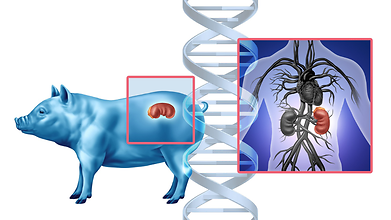
In a significant step toward advancing xenotransplantation—the transplantation of organs or tissues from animals into humans—in India, a dedicated department has been established, with research and regulatory work underway. The country’s first animal-to-human organ transplant could follow, subject to government approval and the establishment of legal and ethical guidelines.
The initiative aims to help bridge the organ shortage in the country, Dr. Shikhar Tripathi, Director of the Department of Xenotransplantation Sciences at Sir Ganga Ram Hospital, New Delhi, helming the project, told HealthandMe.
Dr. Tripathi, who has trained with Dr. David K. C. Cooper, a British surgeon-scientist and pioneer of modern xenotransplantation, believes India could perform its first xenotransplant within six months of receiving government permission.
The push comes as xenotransplantation continues to make progress internationally. In 2025, a patient received a genetically engineered pig kidney and lived without dialysis for 271 days before subsequently receiving a human kidney transplant.
India recorded 20,138 organ transplants in 2025, ranking third globally. However, the gap between the demand for and supply of organs remains significant, with deceased-donor donations accounting for a small share of transplants.
Dr. Tripathi estimates India’s annual organ shortage at around 90,000. According to data reported by hospitals and transplant centers on the National Organ and Tissue Transplant Organization (NOTTO) National Registry Portal, the waiting list for major organs stood at 89,839 as of March 3, 2026.
Kidneys accounted for the largest share of patients on the waiting list, followed by livers, hearts, lungs and pancreases.
In an interview with HealthandMe, Dr. Tripathi, who is also working with Dr. Cooper at the Thomas E. Starzl Transplantation Institute in Pittsburgh, US, discussed the scientific barriers, infection risks, regulatory requirements and potential of xenotransplantation in India.
Q. A pig kidney functioned for 271 days without dialysis in a human. What does this milestone mean for xenotransplantation?
Dr. Shikhar Tripathi: Xenotransplantation has achieved significant milestones, but researchers are still working toward long-term viability. For now, it could serve as a bridge for patients who need an organ while researchers work to address complications and improve graft survival.
“Xenotransplantation has achieved some really significant milestones in the last year or so.”
Q. What are the main barriers to long-term survival of a transplanted animal organ?
Dr. Tripathi: Genetic engineering has helped researchers modify the pig genome to reduce the risk of early rejection. The challenge now is managing late complications, particularly in kidney xenotransplantation.
Two major concerns are proteinuria, or leakage of proteins through the kidney, and thrombotic microangiopathy (TMA), which involves injury to microscopic blood vessels.
“The current barrier we face is late complications of xenotransplantation.”
He added that his group has published research identifying potential pathways involved in proteinuria and TMA and is investigating ways to address these complications.
Read More: World Organ Donation Day 2026: Too Old Or Too Sick To Donate Organs? Doctors Bust Key Myths
Q. What are the infection risks associated with xenotransplantation, and why is lifelong monitoring important?
Dr. Tripathi: One concern is zoonosis, or the transmission of infection from an animal or animal organ to a human. Genetic modifications are intended to address this risk.
“There have been as many as 69 gene edits that have been done by eGenesis,” he said, referring to the company developing genetically engineered organs for transplantation.
Dr. Tripathi believes the risk of zoonotic infection is minimal, but this does not eliminate the risk of infection. Patients also face infections associated with immunosuppression, which is used to prevent their immune systems from rejecting a transplanted organ.
Dr. Tripathi’s group is also working toward accommodation and tolerance, which could allow transplanted organs to function with less immunosuppression.
He said lifelong monitoring of recipients will be needed to track outcomes and ensure continued medical care.
Q. India continues to face a significant organ shortage. How could xenotransplantation help bridge the gap between demand and supply?
Dr. Tripathi: India’s annual organ shortage is around 90,000, and it is increasing. The challenge is not just finding donors but ensuring they are medically fit and compatible with recipients.
He recalled a case in which an 85-year-old father-in-law was willing to donate a kidney to his daughter-in-law, but his age made him unsuitable, and no other family member was a match.
“The question is not whether you have a donor available. It’s also whether your donor is healthy or not,” he said.
He also raised ethical concerns about dependence on deceased-donor organs, arguing that patients should have alternatives that do not depend on another person’s death.
“I think xenotransplantation is not just going to solve a medical problem. It’s going to solve a moral problem,” he said.
READ: India Records 20,138 Organ Transplants In 2025; Deceased Donor Transplants Reach 3,526
Q. What is Sir Ganga Ram Hospital doing to advance xenotransplantation in India?
Dr. Tripathi: The aim is to carry out the first procedure with scientific support and within the necessary legal and ethical framework.
The team is prepared to move forward once the required guidelines are established and government permission is granted.
Q. How soon could India perform its first xenotransplant, and which type of transplant might reach clinical practice first?
Dr. Tripathi: I believe pancreatic islet-cell xenotransplantation could reach clinical practice before whole-organ transplantation.
Islet cells in the pancreas produce insulin, making them a potential area of research for conditions such as type 1 diabetes.
“It’s my scientific belief that islet-cell xenotransplantation would be the first one to hit the clinics,” he said.
As for India’s first xenotransplant, the timeline depends on government approval. “Potentially, six months from the day of the permission, we can perform the first transplant,” he said.
Q. What scientific, regulatory and biosecurity hurdles must India overcome before its first xenotransplant, and what lessons does the 1997 pig-organ transplant case involving Dr. Dhaniram Baruah in Assam offer today?
Dr. Tripathi: India’s first xenotransplant will have scientific, legal and ethical backing, along with patient consent. He said there was no comparison with the 1997 case involving Dr. Dhaniram Baruah in Assam, in which the patient died seven days after the procedure following multiple infections.
“We will not take a single step out of the legal ambit or the ethical ambit,” he said.
Q. Looking ahead five years, could India become a global leader in xenotransplantation?
Dr. Tripathi: India could play a leading international role. “India will be one of the leaders,” he said.
India can also establish its own xenorgan facilities over the next five to eight years. Until then, transporting organs from overseas companies could be an option, provided a secure transportation system is established in coordination with government authorities.
Can Electrical Shocks To The Brain Reduce Men’s Tendency To Sexualise Women? New Study Finds Change

Credit: AI
Mostly experienced by women, sexual objectification is a dehumanising tendency that distorts perception of the opposite gender. So researchers from University of Exeter have attempted to curb through physical intervention.
A new study, published in journal Social Neuroscience, suggests that it may be possible to change how people perceive sexualised images of women, at least temporarily.
Researchers at the University of Exeter found that ten minutes of mild electrical stimulation to the scalp could remove bias linked to sexual objectification of women.
It improved participants’ ability to recognise upright images of sexualised female models. It also removed the difference in the way such images of women and men were processed by the participants. Researchers associated that visual pattern with sexual objectification.
“Sexual objectification means treating a person as a body to be looked at or used, rather than as a whole person. It’s dehumanising and most often experienced by women,” said Professor Ciro Civile, author who led the research.
How Did the Experiment Work?
The study included 76 students, including 54 women and 22 men. Participants were asked to memorise photographs of male and female models wearing underwear in sexualised poses. The images were presented both upright and upside down.
They were subsequently shown a mixture of previously seen and new images and asked to identify the models they recognised.
Half the participants received ten minutes of mild electrical stimulation through two electrodes placed on the scalp. The other half received a sham treatment involving just 30 seconds of stimulation. Neither the participants nor the experimenters knew who had received the active stimulation.
The technique, called transcranial direct current stimulation (tDCS), uses a weak electrical current to influence brain activity. Participants generally experienced a mild sensation like tingling.
Results After Brain Stimulation
People typically recognise faces and bodies more easily when they are upright than when they are upside down. This is called the inversion effect. It reflects the brain’s ability to process a person as a whole, rather than as a collection of separate features.
Previous research has found that this upright recognition feature is smaller for sexualised images of women than for images of men. Researchers interpret this difference as a sign that sexualised female bodies are being processed more like objects.
In the new study, participants who received the sham treatment showed this pattern. Those who received active stimulation, however, became better at recognising upright images of women, and there was no significant difference between the processing of male and female images.
Civile said, “Our findings are initial evidence that the way our visual system processes sexualised images of women can be changed, at least temporarily, by mildly stimulating the brain.”
He added, “This was a lab study – we didn’t measure attitudes or behaviour, and brain stimulation is no cure for sexism – but it gives us a new way to study how objectification works.”
Also read: Can Mental Health Improvement Help Lower High Blood Pressure? Study Points Towards 3 Habits
Can Electrical Stimulation Reduce Sexism?
The experiment basically measured performance on a specific visual-recognition task, not participants’ beliefs, behaviour or their outlook on women.
The researchers also tested recognition during stimulation or immediately afterwards. They did not identify how long the change lasted or whether the findings would apply outside the laboratory.
The sample was also small and consisted entirely of university students, so further research is needed to test the findings in bigger sample sizes
Sexual objectification is behind various harmful outcomes, including body shame, anxiety, eating disorders and greater tolerance of sexual harassment. Understanding how objectifying perceptions arise may help researchers investigate ways to address these sexist biases.
Cyclone Arnab: Health Risks To Watch Out For After The Storm
Credit: AI
The Indian Meteorological Department has put the coastal states of Andhra Pradesh and Odisha on high alert as Cyclone Arnab is due to make a landfall on Wednesday forenoon.
The department said that a “very severe” cyclonic storm, named Ornab (Arnab), is forming over the Bay of Bengal, nearly 260 km southeast of the port city of Visakhapatnam, the most populous city in Andhra Pradesh.
Nearly 12 million people live on the cyclone’s projected route, which runs inland and north across India, according to Andhra Pradesh’s disaster management authority.
Out of around 400,000, nearly 50,000 people in vulnerable areas have been evacuated to state-run shelters since Monday, according to Reuters. According to The Hindu, around 48,000 people are being mobilised to safer areas in Odisha.
Health Risks After The Storm
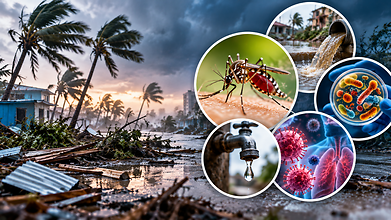
Cyclonic storms do not just end when the winds blow away or floodwater recedes. Floodwater may contain human and animal waste, chemicals and decaying organic matter. This could contaminate drinking water.
Contaminated drinking water, damaged sewage systems and stagnant pools can create conditions for waterborne infections and mosquito-borne diseases in the days and weeks that follow.
Exposure may increase the risk of gastrointestinal infections, while contact with contaminated water can also transmit infections like leptospirosis. Additionally, water collected in puddles and blocked drains can turn into breeding sites for mosquitoes.
Dr Divya K S, infectious disease specialist at Apollo Hospitals, Seshadripuram, Bengaluru, told HealthandMe that the health risks that can emerge after Cyclone Arnab, the warning signs to watch for and the precautions people should take.
Risk Of Water-Borne Infections
One of the biggest post cyclone threats is contamination of drinking water sources. Floodwaters can cross into potable water networks and mix with sewage, allowing disease germs to enter water used for drinking, cooking and washing.
Dr Divya warns of the risk posed by acute enteric pathogens, which can cause gastrointestinal illnesses. “Widespread contamination of municipal water and sewage water can cause an increase in pathogens causing gastroenteritis like Cholera, enteric fever etc.,” she says.
She added, “Floodwater is an active biohazard matrix containing human/animal waste, chemicals, and decaying organic matter.”
According to the expert, exposure to these pathogens could lead to different infections: Acute Diarrheal Pathogens: Vibrio cholerae, enterotoxigenic E. coli (ETEC), Salmonella enterica, Shigella spp., Campylobacter, and enteric viruses (Rotavirus, Norovirus) causing acute watery diarrhea and inflammatory dysentery. Leptospirosis: Leptospira shed in rodent urine can penetrate abrasions or mucous membranes.
Contaminated water and food can transmit infections like cholera, enteric fever and other infections like dysentery. Enteric viruses, including norovirus and rotavirus, can also cause diarrhoea.
Symptoms may include diarrhoea, vomiting, abdominal cramps and fever. Severe diarrhoea can lead to dehydration, which is particularly dangerous for young children, older adults and people with underlying health conditions.
People should seek medical attention if they develop bloody diarrhoea, vomiting, severe abdominal pain, high fever, confusion, or other signs of severe dehydration.
Risk Of Vector-Borne Infections
As floodwaters recede, water may collect in puddles, blocked drains and other neglected spaces. These sites can cause mosquito breeding, increasing the risk of diseases like dengue, chikungunya and malaria.
Dr Divya says, “Vector populations surge sharply within 1 to 2 weeks post-cyclone. As floodwaters recede, micro-environments like puddles, discarded containers form ideal sites for mosquito breeding.”
After a cyclone, it is therefore important to remove breeding sites by clearing out stagnant water. Residents should empty discard containers that collect water, clear blocked drains, and avoid water accumulation around their homes.
Also read: Climate Change And Gut Health: How Heat, Drought And Unsafe Water Raise Risks, Global Experts Warn
Who Is The Most Vulnerable After A Storm?
Some people face a higher risk of severe complications because of their age, health conditions or difficulty accessing medical care. Dr Divya identifies the following groups as particularly vulnerable:
- Immunocompromised people: Those with advanced HIV, cancer patients receiving chemotherapy, transplant recipients and people taking immunosuppressive medicines.
- Children and older adults: Both groups may be more vulnerable to dehydration and severe illness.
- Pregnant women: Infections and disruptions in maternity care can pose additional risks.
- People with chronic conditions: Those with diabetes, chronic kidney disease or cardiovascular disease may need uninterrupted access to treatment.
During evacuation, people must carry emergency medicines. Insulin and other temperature-controlled medicines need appropriate storage, while people receiving dialysis, chemotherapy or care related to transplant may need urgent arrangements if services are disrupted.
Pregnant women should continue to access antenatal care and seek urgent help for warning signs like bleeding, severe abdominal pain or reduced fetal movement later in pregnancy.
How To Protect Yourself After The Storm?
Safe drinking water, hand hygiene and food safety are essential after a cyclone, especially when sanitation infrastructure has been damaged.
Dr Divya recommends boiling water to make it safer to drink. “Boiling water can ensure disinfection of the water borne infections,” she says.
The doctor also emphasises hand hygiene and safe food practices. “Rigorous hand hygiene using soap and water prior to food consumption and post-defecation,” she recommends.
Food should be thoroughly cooked and served hot. Avoid raw produce that cannot be washed, food exposed to flies and meals whose handling or storage conditions are unsafe.
- Follow Us :


© $2026 Times Horizon Private Limited