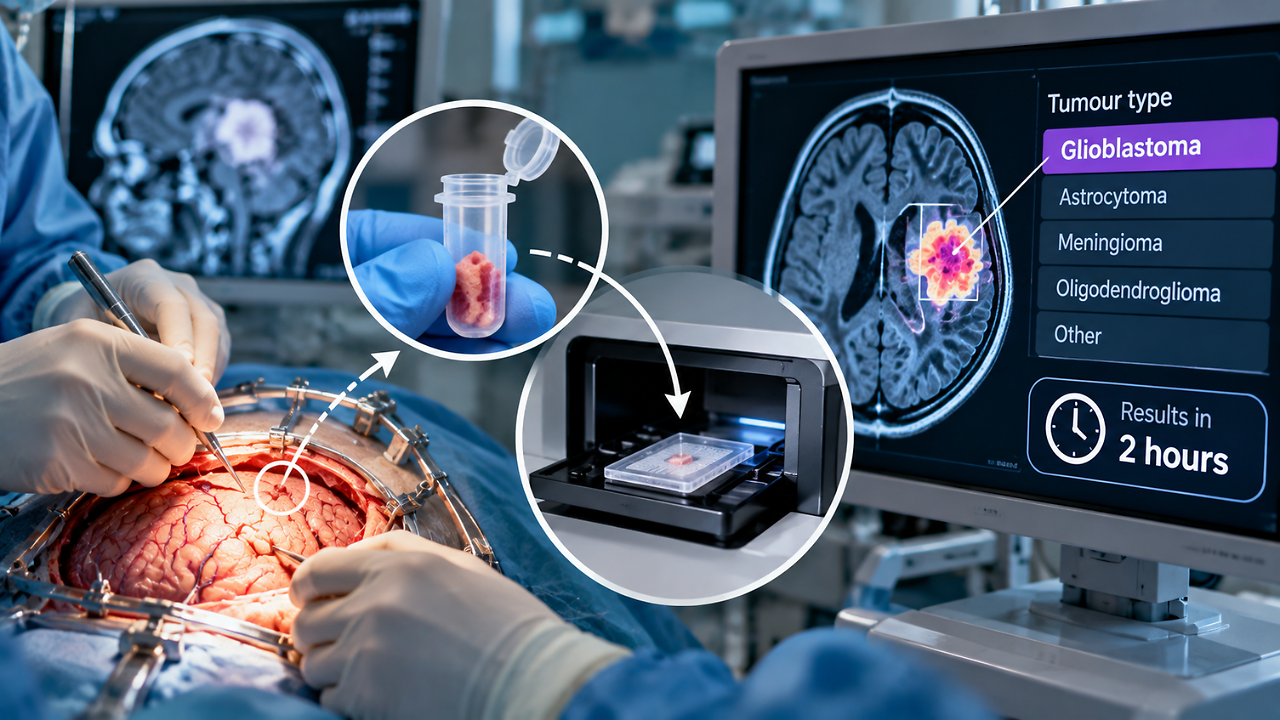
Doctors may soon be able to determine a brain tumour’s type right during the surgery. Doctors remove a tissue sample during surgery to analyse the tumour. Patients undergoing surgery for brain tumour may not have to wait days or weeks to find out. A new rapid genetic test being tested by the NHS in England promises to shorten the wait time drastically. The technology can find the precise type of brain tumour within about two hours, while the patient is still on the operating table. Developed by researchers at the University of Nottingham and Nottingham University Hospitals NHS Trust, the test analyses the genetic code of a tumour sample rather than relying only on traditional microscopic examination. Brain Tumour Diagnosis Takes A Long Time Brain tumours are not connected to one single disease. There are more than 100 types, ranging from relatively slow-growing tumours to highly aggressive cancers. Knowing the exact type and characteristics of a tumour is important because treatment courses can differ significantly. Traditionally, doctors take a sample during surgery and send it to a pathology laboratory. The tissue sample is then examined under a microscope. Finding out the tumour type usually takes weeks. According to an NHS centre, the current average time for a brain tumour diagnosis can be around 26 days, while other reports have estimated up to almost eight weeks in some cases. In case of aggressive tumours, waiting period can be particularly difficult and longer.Also read: Rabies Day Exclusive: ‘We Need To Target The Source’ For A Rabies-Free India By 2030, Says Veterinary EpidemiologistMore About The New Test The rapid genomic test works by analysing a small piece of the tumour which is taken during the surgery and sent to the laboratory, where its DNA is analysed using a shoebox-sized sequencing machine developed by Oxford Nanopore. Inside the machine, DNA molecules pass through tiny pores. As they move through, the system reads their genetic information and uses the resulting genomic pattern to identify the tumour type. Marking a significant jump in speed and time taken, the test can help doctors can receive detailed diagnosis during the operation itself instead of weeks.Also read: Radiotherapy Cuts Risk Of Atypical Meningioma Recurrence By Nearly Half: Lancet Study Promising Development In Brain Tumour Diagnosis Not only this test reduces weeks, sometimes months of anxiety, it can also help surgeons make immediate decisions about how much tumour tissue to remove while protecting healthy brain tissue.Some tumour types require different surgical approaches, and having molecular information immediately could help the surgeon take quick decisions. A rapid diagnosis can also help patients to begin the appropriate treatment sooner and gain earlier access to clinical trials designed for specific tumour types. The NHS is piloting the technology to determine how well rapid genomic testing works in routine clinical practice. The initial rollout covers five specialist centres, including Nottingham University Hospitals, University Hospitals Birmingham, Great Ormond Street Hospital, King's College Hospital and Newcastle Hospitals. More centres are expected to be added soon. The rapid testing is therefore intended to complement the entire diagnostic process rather than make traditional pathology obsolete. If the NHS pilot is successful, rapid genomic testing could eventually make that information available much earlier to brain tumour patients across England.